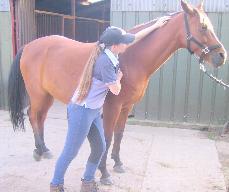
These sessions are invaluable to competition horses in the form of pre event massage, to aid warm up and preparation for an event and post event massage, to discourage aches and pains after extreme exertion
Older horses or those with ongoing issues such as arthritis or laminitis will have their symptoms much relieved. Every horse will benefit from regular massage to ensure their body is in the best condition to do the work required of them.
About Us
Lorna is qualified in Equine sports massage and certified as an Equine Body Worker (EEBW) fully insured and must undertakes continued professional development training each year.
Based in South Cheshire, covering Cheshire, Shropshire, North Wales and the Wirral, mileage will be charged if further than 10 miles radius. Please call for details.
Please note – Equine sports massage is not a substitute for veterinary care and horses will only be treated with the permission of your veterinary surgeon.
To discuss your horse, find out more or to book an appointment please contact me:
Lorna Kettle EBW
Tel: 07939 648426
Email: Lorna@happierhorses.co.uk


 Print
Print 
Contact us today!
If you have any queries or wish to make an appointment, please contact us:
+44 079 39648426 +44 079 39648426
lorna@happierhorses.co.uk
Or use our contact form.
 Share
Share